Why it matters
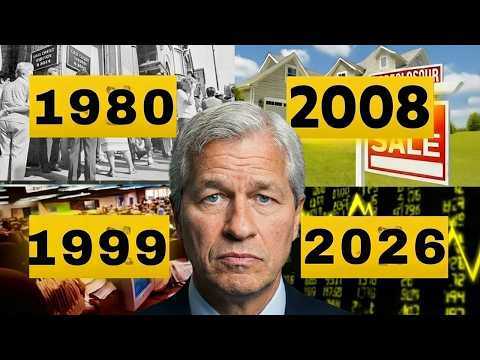
Jamie Dimon's annual shareholder letter runs thousands of words — but one buried qualifier, "probably," exposes the limits of what the most connected banker in the Western world can actually guarantee about private credit risk. When the head of JPMorgan cannot rule out systemic contagion, every leveraged lender and yield-chasing investor needs to pay attention.
The big picture
Private credit has expanded aggressively into middle-market corporate lending over the past decade, operating with weak covenants, opaque valuations, and optimistic performance assumptions baked into deal structures. Regulated banks like JPMorgan are only indirectly exposed — but the broader shadow banking ecosystem is not. The credit cycle Dimon describes has not arrived yet, but the labor market data suggests the economy is already doing the groundwork.
Key details
- Dimon confirms credit standards have been "modestly weakening pretty much across the board" — including more aggressive addbacks, weaker covenants, increased PIK usage, and looser private ratings
- He acknowledges actual losses right now are already a little higher than they should be relative to the current environment — before any formal recession has been declared
- Private credit lacks rigorous transparency and mark-to-market discipline, which Dimon flags as a risk multiplier: forced selling can accelerate losses even when realized credit losses remain contained
- US payroll growth in 2025 totaled just 116,000 for the entire year — a number that represents a bad single month, not an annual figure — against a minimum threshold of 2.5 million jobs needed to sustain the expansion
- The ISM non-manufacturing employment index crashed nearly seven points to 45.2 in March, while the prices index surged to 70 — a stagflationary combination that historically precedes credit stress in leveraged lending
What they said
"I do believe that when we have a credit cycle, which will happen one day, losses on all leveraged lending in general will be higher than expected relative to the environment. This is because credit standards have been modestly weakening pretty much across the board." — Jamie Dimon, JPMorgan Chairman & CEO, 2025 Shareholder Letter
"In the great scheme of things, private credit probably does not present a systemic risk." — Jamie Dimon, JPMorgan Chairman & CEO, 2025 Shareholder Letter
The bottom line
Dimon knows the credit cycle is coming — he says so explicitly — and the best assurance he can offer on systemic risk is a single probabilistic hedge. With job growth having effectively flatlined and energy costs now squeezing the same middle-market employers carrying the heaviest private credit loads, the Japanese carry traders who panicked in the summer of 2024 are looking less like overreactors and more like the only people in the room who did the math.
Bias flag
The source presents a consistently bearish macro framework and has maintained a recession call since mid-2024. That view now has meaningful data support, but readers should weigh the selective emphasis on deteriorating labor indicators against the fact that headline payroll prints have remained positive in early 2026. The analytical lens here is structurally skeptical of official data revisions running in the optimistic direction.