The Fed Is Now Watching Private Credit — That's the Tell
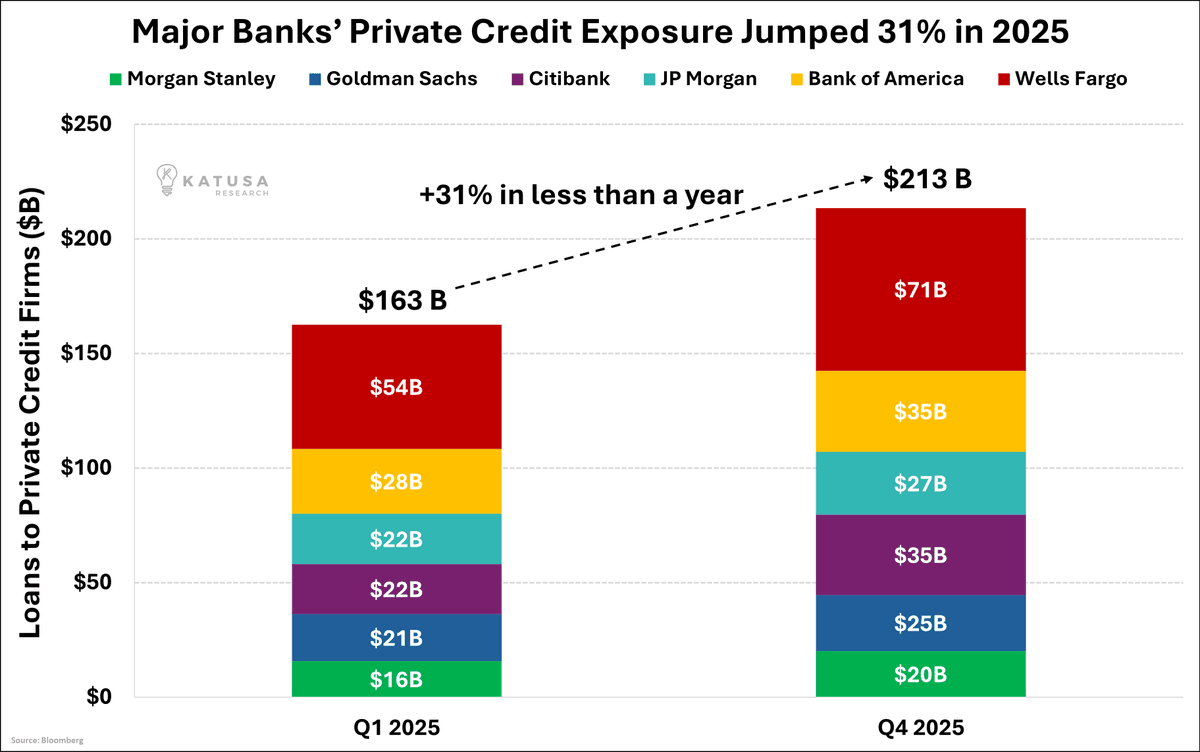
Private credit just crossed $213 billion in the U.S., up 31% in under a year. Wells Fargo alone sits on $71 billion of it. Redemptions are building. Funds are tightening access to cash. And the Fed is paying attention.
That last part is the signal.
Why This Matters
The Fed doesn't start watching asset classes out of curiosity. It watches them when it thinks they can break something. Private credit is illiquid by design — loans don't trade on an exchange, prices don't update in real time, and when investors want their money back, there's no order book to absorb the selling. Think of it like a hotel that looks fully booked until everyone tries to check out at once.
At $213B and growing, the sector is no longer small enough to ignore if it seizes up.
The Numbers That Matter
- $213B — total U.S. private credit AUM, up 31% in under a year
- $71B — Wells Fargo's private credit exposure alone, making it the single largest institutional player by this measure
- Net liquidity: ~$6B — essentially flat over the past 30 days, meaning there's no rising tide to paper over stress if redemptions accelerate
- TLT at $86.49 — long bonds still under pressure, confirming rates remain restrictive; the environment that made private credit attractive (reach for yield) is the same environment that makes the exit crowded
The Plumbing Problem
Private credit boomed because rates were low and investors needed yield. Now rates are restrictive, net liquidity is flat, and the same investors who piled in are asking questions about getting out. The funds' response — tightening cash access — is the classic sign of a system under stress. When a fund limits redemptions, it isn't managing risk. It's managing a queue.
The Fed noticing this isn't reassurance. It's a warning label.
"Redemptions keep building while funds tighten access to cash." — @KatusaResearch, April 13, 2026
Acid Take
Thirty-one percent growth in under a year into an illiquid asset class, during a period of flat net liquidity and restrictive rates, with the Fed now officially watching — this is the setup for a disorderly unwind, not a soft landing. The question isn't whether private credit stress spills into broader markets. It's whether the Fed moves fast enough when it does. History says no.
Bias Flag: Katusa Research has a track record of flagging credit stress early and leaning structurally bearish on leveraged/illiquid assets. That bias aligns with the data here — but it's worth noting the framing is designed to alarm, not to quantify probability. The $213B figure is real. The timeline for contagion is not specified.
This is not financial advice. Acid Capitalist is a financial news and commentary site — not a registered financial adviser. Always do your own research.
This article was inspired by a post from @KatusaResearch. AC's analysis adds original research, data context, and editorial perspective.