When the Crowd Is Trapped, the Setup Writes Itself
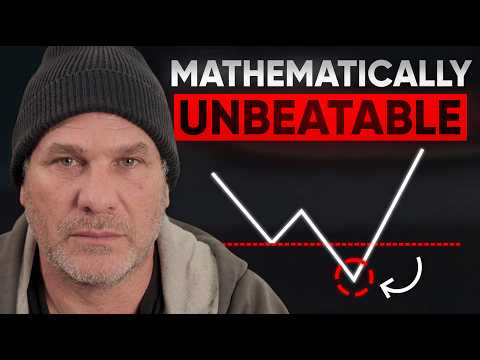
COT data is flashing crowded positioning across multiple futures markets right now. Jason Shapiro — 30-year futures trader, hedge fund manager, and the contrarian featured in Jack Schwager's Unknown Market Wizards — has built his entire career on one insight: extreme positioning is not a risk to manage around. It's the edge itself.
The framework is worth understanding precisely because it runs opposite to how most retail traders think.
How Crowded Positioning Creates Asymmetric Risk-Reward
Shapiro monitors 37 futures markets simultaneously. At any given time, he's only interested in the two or three showing genuinely extreme positioning — the markets where the crowd has piled so far to one side that a reversal doesn't just hurt them. It forces them out.
Think of it like a revolving door jammed with people all pushing the same direction. The moment the door stops, everyone trying to exit at once creates the move. That's the squeeze. And the squeeze is where Shapiro makes his money.
"If a market is showing people who are very, very short, for example, then should that market turn and start moving up, there's a lot of people that are going to get squeezed and therefore there can be a very big move potential."
The April 2025 equity selloff is his cleanest recent example. Trade policy headlines hit. The crowd interpreted them as bearish — correctly, by historical precedent — and shorted aggressively. Positioning went extreme. Then the market stopped going down on bad news. That's Shapiro's trigger.
"We get more news on bad trade policy, which should make the market go down more, but it doesn't. The market ends up closing up. That's what I call market confirmation and that's when I get long."
That moment — when the market fails to respond to the catalyst that drove the positioning — is what he calls news failure. It's not a prediction. It's confirmation that the crowd is already trapped.
The Checklist: Entry, Stop, Size
The framework has three moving parts, and they're tighter than most retail traders run:
- Crowded positioning identified — extreme COT readings, one-sided exposure, historical outlier levels. This is the prerequisite. No crowding, no trade.
- News failure confirmed — the market gets bearish news and closes up, or bullish news and closes down. The crowd is now visibly wrong and on the wrong side of a move.
- Stop placed at the point of failure — if the news-failure trade ultimately works against you, the original thesis was wrong. The stop is logical, not arbitrary.
- Position sized to risk — Shapiro risks 70 basis points per trade. The entry and stop are known, so position size is simple arithmetic.
- Exit when the edge is gone — he exits when positioning normalizes. The edge was the crowd being extreme. Once they're squeezed out, the edge disappears. So does the trade.
That last point is where most traders leave money on the table or give it back. They hold past the thesis. Shapiro doesn't. The trade exists because of positioning. When positioning normalizes, the trade is over.
What Most Retail Traders Get Wrong
Shapiro is direct about the core mistake:
"The first behavior most newer retail traders need to change is this belief that you're going to turn some small amount of money into some large amount of money very quickly. The chances of that are very small."
The framework he runs doesn't require a high win rate. It requires asymmetric setups — trades where being right pays $5 and being wrong costs $1. Run that ratio consistently and you can be wrong more than half the time and still build P&L.
"You should be able to have less than 50% of your trades correct and still make money. And that's what I think most people miss."
This is the part that genuinely doesn't compute for most retail participants. The entire FinTwit ecosystem is built around win rates, hot streaks, and screenshot culture. Shapiro's framework inverts that completely. Win rate is noise. Risk-reward ratio is signal.
The Bottom Line
The crowd is positioned. The question is whether news failure shows up to confirm it. Watch for markets where the catalyst is in place but price refuses to follow — that's where the squeeze sets up.
Acid Take
Shapiro's framework is one of the cleanest expressions of contrarian macro trading in public view right now, and it maps directly onto what COT data is showing across multiple markets. The April equity low is the freshest proof of concept: extreme short positioning, news failure, reversal. The sequence worked exactly as the framework predicted.
The uncomfortable truth for most retail traders is that this approach requires doing nothing most of the time. Shapiro scans 37 markets and trades two or three. That kind of patience — sitting on hands while FinTwit screams about every CPI print and Fed headline — is the actual skill. The setup is mechanical. The hard part is waiting for it.
The crowd will get squeezed again. It always does. The only question is whether you're positioned against them before it starts or chasing the move after.
Bias Flag: Shapiro is pit