Why it matters
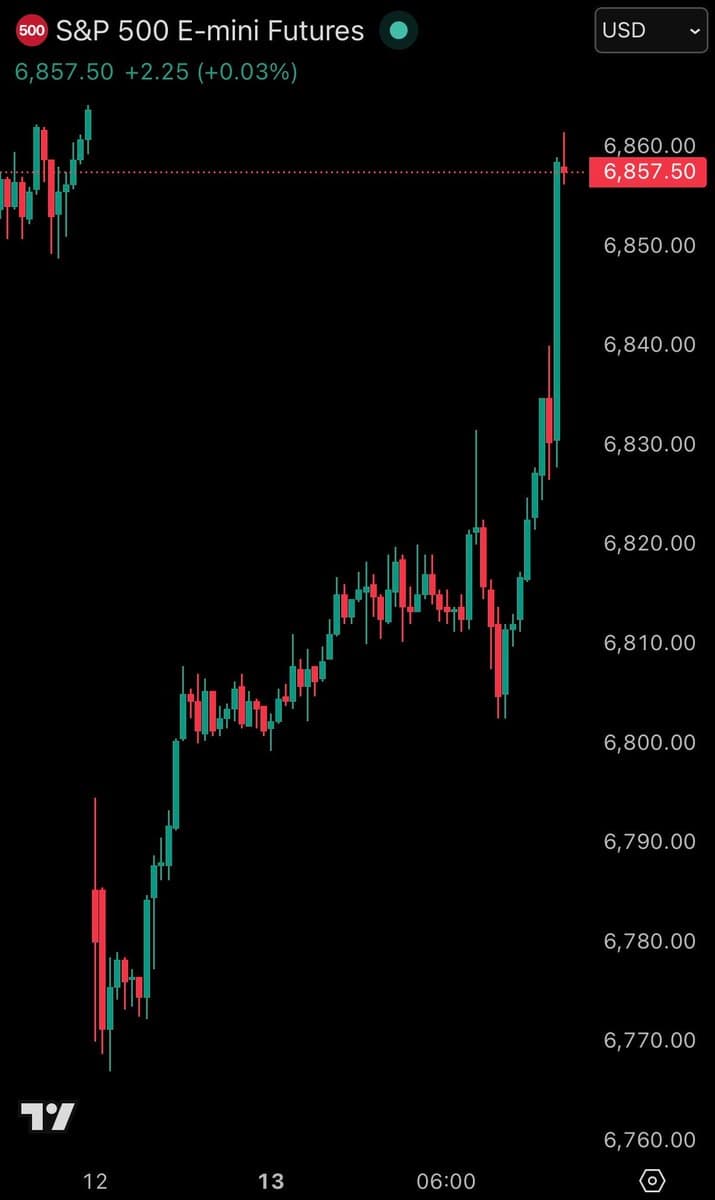
A US blockade of the Strait of Hormuz — the chokepoint for roughly 20% of global oil supply — would normally trigger immediate risk-off selling. The fact that the S&P 500 erased losses and turned green in real time tells you exactly what the market is actually pricing: not chaos, but resolution.
The big picture
The Strait of Hormuz is the single most critical energy chokepoint on the planet. About 17-20 million barrels of oil per day move through it, along with significant volumes of liquefied natural gas. Every major Gulf conflict in modern history — the Tanker War of the 1980s, the Gulf War, post-2018 Iran sanctions — has produced immediate oil price spikes and equity volatility. The market's green reaction here breaks that historical pattern entirely, and that break is the signal worth studying.
What's changed is the interpretive framework. Markets aren't reading this as "conflict begins." They're reading it as "conflict peaks." A direct US military action of this scale is being priced as the final escalatory move before a negotiated outcome — the kind of maximum-pressure play that historically precedes a deal, not a prolonged war.
Key details
- SPY is trading at $679.77, up +0.05% on the day — a flat-to-green print during an event that would have cratered markets in any prior decade
- QQQ at $611.76 (+0.11%) and IWM at $261.98 (+0.26%) confirm the green reaction is broad-based, not just large-cap defensives
- GLD is down -0.99% to $432.82 — gold selling off during a military escalation is the clearest sign that the market is not in panic mode; safe-haven demand is absent
- TLT at $86.43 (-0.07%) shows bonds are flat, not bid — no flight to safety, no systemic fear premium being priced
- The combination of equities green, gold red, and bonds flat is a classic "relief rally" setup, not a risk-off move
::chart[SPY]
What they said
"BREAKING: The S&P 500 erases all losses and turns green on the day as the US begins its blockade of the Strait of Hormuz."
— The Kobeissi Letter, @KobeissiLetter, April 13, 2026
The post is pure signal, no interpretation. That's its value. The interpretation is what you're here for.
The historical read
Informed market participants have seen this movie before. The pattern is called "buy the escalation, sell the de-escalation" — or more precisely, markets front-run the resolution that extreme pressure makes inevitable. When the US mined Nicaraguan harbors in 1984, when it struck Iranian oil platforms in Operation Praying Mantis in 1988, when it launched Desert Storm in January 1991 — in each case, the initial military action marked a turning point that markets eventually priced as clarifying, not destabilizing.
The 1991 Gulf War is the cleanest precedent. The S&P 500 bottomed the day the air campaign began and rallied nearly 30% over the following months. Markets had already priced the uncertainty. Once the action started, the uncertainty collapsed — and equities filled the vacuum.
That's what today's price action is telegraphing. The uncertainty of will they or won't they has been resolved. The US acted. Now the market is pricing the next chapter: negotiation, de-escalation, or a contained military outcome. None of those scenarios are as bad as an open-ended standoff with no resolution in sight.
The gold selloff is the most important confirming data point. GLD down nearly 1% while a military blockade is in progress means institutional money is not hedging for prolonged conflict. If smart money believed this was the start of a multi-month war scenario, gold would be surging, not fading.
The bottom line
When the market turns green on news that would have caused a 3% selloff in any prior era, the market is telling you something fundamental has shifted in how participants are reading geopolitical risk — and right now, they're reading a US blockade of the Strait of Hormuz as the beginning of the end of the uncertainty, not the beginning of a crisis. Trade accordingly.
Bias flag
The Kobeissi Letter is a widely-followed financial commentary account with a track record of breaking market-moving headlines. The post here is factual and non-interpretive, but the account's broader output skews toward dramatic framing that drives engagement. The raw price data confirms the signal is real — the framing is not inflated in this case.
This article was inspired by a post from @KobeissiLetter. AC's analysis adds original research, data context, and editorial perspective.