The Leade
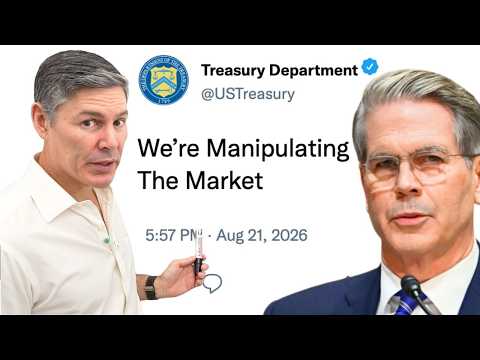
Treasury Secretary Scott Bessent just confirmed what bond bears have been screaming since March: the government is stepping up debt buybacks to prop up the long end of the curve. Call it what it is — yield curve control by another name. History says it's not going to work.
Why It Matters
The 10-year Treasury yield ran from 3.75% in March to 4.75% today — a 100 basis point move that's dragged 30-year fixed mortgages into what's being called the "no bueno zone" heading into midterms. When the government starts intervening in bond markets to manage the outcome, that's not a technical adjustment. That's an admission the market has more control over rates than Washington does.
The Big Picture
This isn't the first time policymakers have tried to force long rates lower. QE1, QE2, and QE3 all had the explicit goal of suppressing the 10-year yield. All three ended with yields higher than when they started. The pattern isn't subtle — it's the entire monetary history of the last two decades staring back at anyone paying attention.
Key Details
- The mechanics: Treasury sells short-dated bills — think one-month T-bills — and uses the proceeds to buy long-dated maturities (10, 20, 30-year). Bessent confirmed buybacks could exceed the current $4 billion per issue.
- Not QE: This doesn't expand the Fed's balance sheet or increase bank reserves. The New York Fed's trading desk likely executes it, but it's a Treasury operation, not monetary expansion. Calling it "QE lite" misdiagnoses the plumbing.
- The QE precedent: 10-year yields were higher at the end of QE1, QE2, and QE3 than at the start of each program — despite each one being designed explicitly to push yields down.
- The yen parallel: When the BOJ and Japan's Ministry of Finance intervened to strengthen the yen, USD/JPY reverted to pre-intervention levels within weeks — currently sitting around 158-159 after a round-trip toward 163-164.
- The correlation that matters: 10-year yields track nominal GDP (growth + inflation) with far more consistency than they track debt levels or deficits. U.S. debt crossed $40 trillion this year, yet yields sit well below 1980 levels — when debt was a fraction of today's.
What They Said
"We routinely do buybacks and we're going to increase the size of the buyback. And I would note that it could be more than the $4 billion per issue." — Scott Bessent, Treasury Secretary
The quote reveals the tell: you don't need to "increase the size" of a routine operation unless the routine operation isn't working.
The Plumbing: Why Supply Creates Its Own Demand
Here's the part that trips up nearly everyone doing supply-and-demand analysis on Treasuries: more debt should mean lower prices (higher yields), full stop. Except that's not what 45 years of data shows.
The mechanism is simple once you see it. Banks holding dollar liabilities have two choices: lend to the government (buy Treasuries) or lend into the private economy. If nominal GDP is running at 6% and the 10-year yield is sitting at 2%, banks pile into private credit at 8% — the risk-reward favors it. But if debt fears push the 10-year to 10% while nominal GDP is still 6%, suddenly a "risk-free" 10% beats corporate credit at 8%. Every bank, hedge fund, and pension fund piles into Treasuries. That flood of buying pushes yields right back down toward where growth and inflation say they should be.
This is why the correlation between nominal GDP and 10-year yields is one of the strongest, most durable relationships in macro — and why the correlation between yields and debt-to-GDP is close to zero, sometimes inverse. The bond market self-corrects. Debt-driven spikes are noise; growth and inflation expectations are the signal.
The Bottom Line
Watch nominal GDP and inflation expectations, not the buyback schedule. If oil holds in the $80-85 range and there's no further escalation in the Middle East, the growth-and-inflation math points to lower yields a year out — not because Bessent engineered it, but because that's where the underlying trend was always headed.
Acid Take
Treasury buybacks are a bet that supply-and-demand mechanics can override growth and inflation expectations. The data says no — every single time this has been tried at scale (QE1, QE2, QE3, BOJ yen intervention), the market reverted to trend within weeks or months. This buyback program will produce short-term noise — maybe a few basis points of relief right before midterms, timed suspiciously well. But it doesn't change the trajectory. The 10-year goes where nominal GDP goes. Full stop.
This is not financial advice. Acid Capitalist is a financial news and commentary site — not a registered financial adviser. Always do your own research.