Why it matters
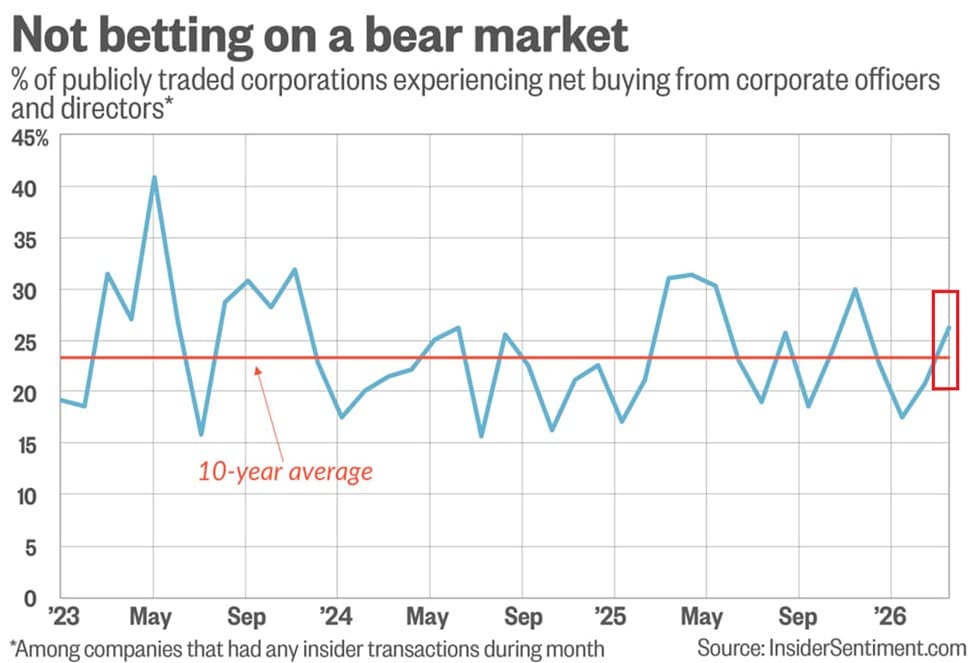
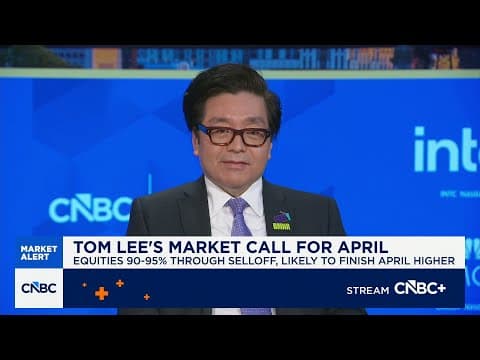
Tom Lee, one of Wall Street's most closely tracked bulls, is doubling down on equities despite the Middle East conflict — arguing that investors sitting in cash are already late to the recovery and the window to re-enter is closing fast.
The big picture
The S&P 500 fell from roughly 6,900 to 6,350 through March before bouncing back to 6,580. That's a round trip that punished both sellers and hesitant buyers. Lee's core argument isn't optimism for optimism's sake — it's pattern recognition: across seven major war events in modern history, equity markets have consistently bottomed within the first 10% of a conflict's total duration, then moved on.
The macro backdrop complicates the picture. Jamie Dimon's annual letter flagged a credible downside scenario — inflation creeping higher through 2026, forcing rates up, crushing asset prices, and triggering a flight to cash. That's the bear case in plain English, and it deserves to be taken seriously.
Key details
- Lee puts 90–95% of the war-driven market damage in the rearview mirror, with the S&P currently sitting just ~5% off its highs
- Historical precedent across seven major conflicts shows markets bottom in the first 10% of a war's duration — World War II lasted nearly five years, and equities bottomed five months in
- Wartime defense spending is running at approximately $30 billion per month and potentially scaling toward $100 billion — a direct economic stimulus that Lee argues offsets much of the consumer pain from elevated oil prices
- Every $10 rise in oil translates to roughly $4–5 billion per month in consumer drag — Lee's math shows the spending stimulus materially outweighs that headwind
- Lee maintains his S&P year-end target of 7,700, and describes the market as "spring loaded" — a ceasefire or peace deal would, in his words, produce an "explosive" upside reaction
- The Fed is not cutting rates near-term; Lee agrees market expectations on that point are correct
What they said
"We did look at the past seven major war events, and the stock market adjusts pretty quickly — within the first 10% of the entire duration of a war, the stock market usually bottoms. So I do think as bad as March was, we've probably seen a big part of that adjustment." — Tom Lee, Head of Research, Fundstrat
"Investors who've gone to cash really have to start to think about how war, as much as it's a crisis — people focus on the negatives initially, but then they need to start thinking about the opportunity." — Tom Lee, Head of Research, Fundstrat
The bottom line
Lee's historical framework is legitimate and his math on wartime stimulus vs. oil drag is worth stress-testing — but his 7,700 year-end call lives or dies on the war's duration, and nobody, including Lee, knows that number yet. Cash holders face a real dilemma: the easy re-entry point may already be gone.
Bias flag
Tom Lee is a perennial bull and CNBC contributor with a long public track record of optimistic S&P targets. His framing consistently emphasizes upside catalysts over downside risks. Weight his probability estimates accordingly — the historical war data is real, but the 90–95% "damage done" figure is a judgment call, not a model output.